
.png)


Technical Disciplines

A choreographed program routine using one baton in a non-musically-interpretive exercise demonstrating achieved skills within the modes of aerials, rolls, and contact material in combination with stationary complex bodywork that is executed to a standard and timed piece of music.
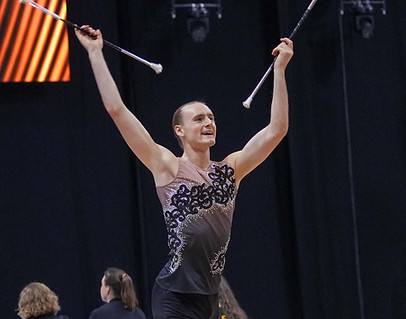
A choreographed program routine using two batons in a non-musically-interpretive exercise demonstrating the intricacy and interrelationship of two batons within the modes of aerials, rolls, and contact material in combination with stationary complex bodywork that is executed to a standard and timed piece of music.
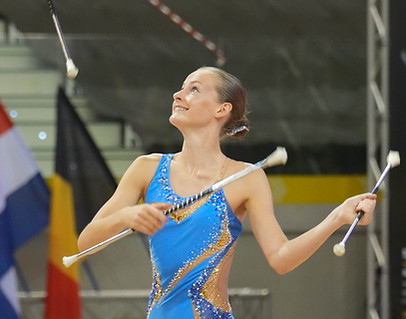
A choreographed program routine using three batons in a non-musically-interpretive exercise demonstrating juggling, intricacy and interrelationship of three batons within the modes of aerials, rolls, and contact material in combination with stationary complex bodywork that is executed to a standard and timed piece of music.
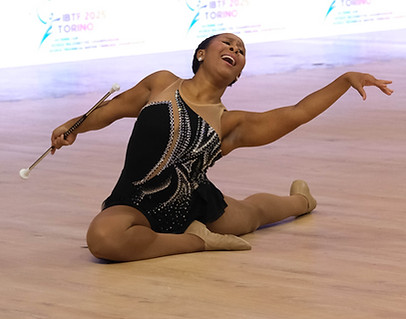
A choreographed and interpretive program routine using one baton to demonstrate blended baton and body skills that is executed to a standard prescribed musical selection.

A choreographed program routine using one baton in a rhythmically timed exercise in an “X” pattern demonstrating various forms of movement and basic marching with complimentary baton usage that is executed to a standard piece of music.

A choreographed program routine of two athletes using one baton each in a non-musically-interpretive exercise demonstrating achieved skills of individual and dual-interrelationship skills of the modes of aerials, rolls, and contact material in combination with stationary complex bodywork that is executed to a standard piece of music.

A choreographed and interpretive routine of two athletes using one baton each to demonstrate blended baton, body, and partnering skills in combination with stationary and traveling complex bodywork executed to a standard prescribed musical selection.
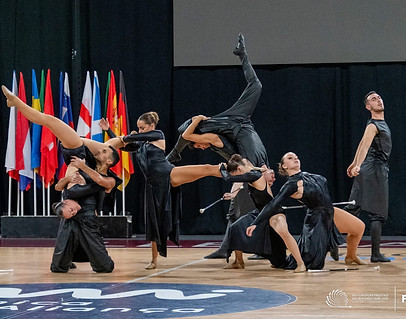
A choreographed program and musically interpretive routine with a maximum of eight athletes all using one baton each to demonstrate baton, body, and group skills of synchronic twirling and interactive elements blended together with both stationary and traveling complex body movements, along with exchanges executed to music of the team’s choosing.

A choreographed program and musically interpretive routine of ten or more athletes all using one baton each to demonstrate baton, body, and group skills of synchronic twirling and interactive elements blended together with both stationary and traveling complex body movements, along with exchanges executed to music of the group’s choosing. Content restrictions on both baton & body skills are required. The emphasis is on total precision and perfection.

A choreographed program and rhythmically timed routine with a maximum of eight athletes all using one baton each to demonstrate blended baton, body, and team skills executed to a standard prescribed musical selection.

DanceTwirl Team
It is a program of pure dance and movement that expresses the soundtrack in a very effective and visual way within the dance genre selected by the team and choreographer. The motivation for such a program could originate from Broadway Musical Theater, Ballet, Jazz, HipHop, Storyline theatrics, Ethnic, etc. The vast array of possibilities is endless. Quality and integrity of the dance is crucial and is of paramount importance. Teams should strive to be original, unique, entertaining and memorable. DanceTwirl Teams are not about baton tricks or anything that focuses on the baton. The modes of twirling in isolation is not a focus. The three modes should be used to support the genre, character, theme of the program. The baton is used as an accessory/prop enhancing the dance and creates another dimension to the body. This is how “blending” is perceived and evaluated.
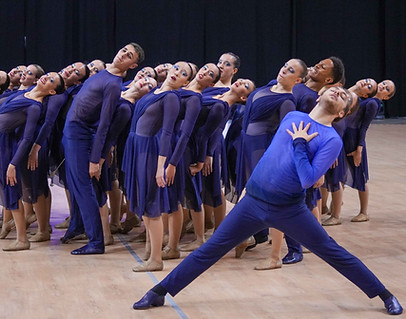
The Twirling Corps discipline is a group event in which athletes perform a twirling-dominant routine to their own choice of music. Twirling Corps is defined by collective twirling excellence: many athletes perform as one through precision, uniformity, and baton priority. The essence of this discipline is the visual and technical impact created when the entire group demonstrates shared baton skill, synchronized timing, and cohesive teamwork. The discipline should clearly emphasize the collective identity of the group rather than individual display. The primary impression should be that all members contribute equally to a unified performance in which baton technique remains the central focus and body movement and staging serve to enhance the overall presentation. Formations, floor coverage, transitions, and musical interpretation should function as a framework that reveals and strengthens the collective twirling performance.